When we think of architectural innovation that helped define the California modern home, few names resonate as deeply as John Lautner. A true architectural pioneer of the 20th century, Lautner’s work reshaped how we think about space, light, and life in Southern California living.
Who Was John Lautner?
Born in 1911, John Lautner, FAIA, had a career that spanned more than five decades and left an indelible mark on Southern California’s built environment. After studying under Frank Lloyd Wright at the Taliesin Fellowship, Lautner went on to define his own bold architectural voice, one that married organic principles with daring structural innovation.
Unlike the minimalist International Style popularized by many of his contemporaries, Lautner pursued a visionary approach to design: homes that weren’t simply structures, but dynamic experiences shaped by light, site, and environment. His work is characterized by expressive forms, open plans, panoramic glass walls, and a deep connection between interior space and the natural world, qualities that would become synonymous with mid-century modernism in California.
A Rare Architectural Treasure: 1430 Avon Terrace, Echo Park
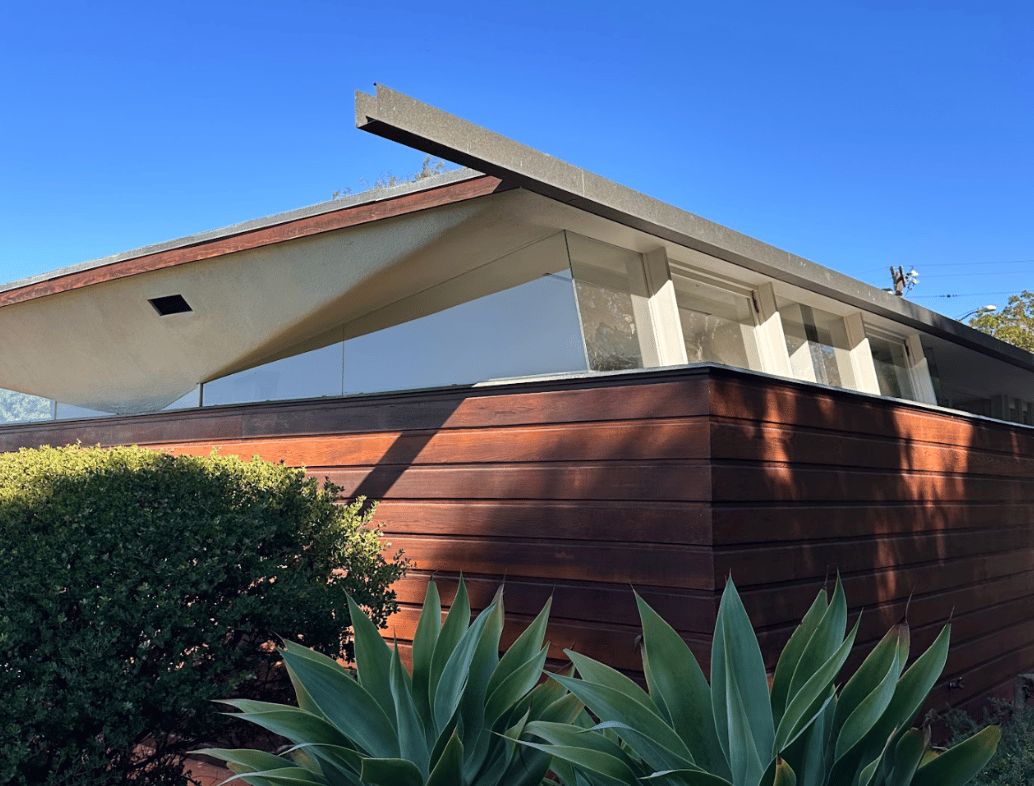
Last month, Aspire LA had the privilege of previewing a very special property designed by John Lautner: the Jules Salkin Residence, located at 1430 Avon Terrace in Echo Park.
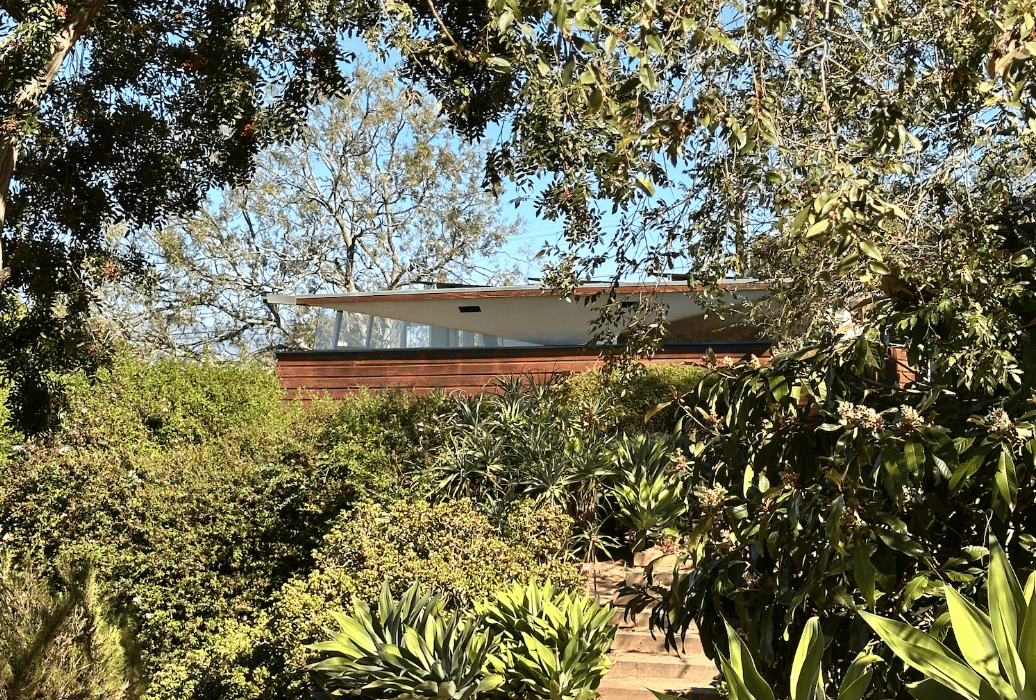
Built in 1948, the Salkin House is a noteworthy example of Lautner’s early residential work and is recognized as Los Angeles Historic-Cultural Monument No. 1111. Originally commissioned by patron Jules Salkin, this mid-century modern home sat quietly off the architectural radar for decades, earning it the nickname “the lost Lautner.” More recently, a thoughtful restoration led by architect Barbara Bestor returned the home to its original spirit, blending period details with thoughtful modern updates.
Architectural Features That Stand Out
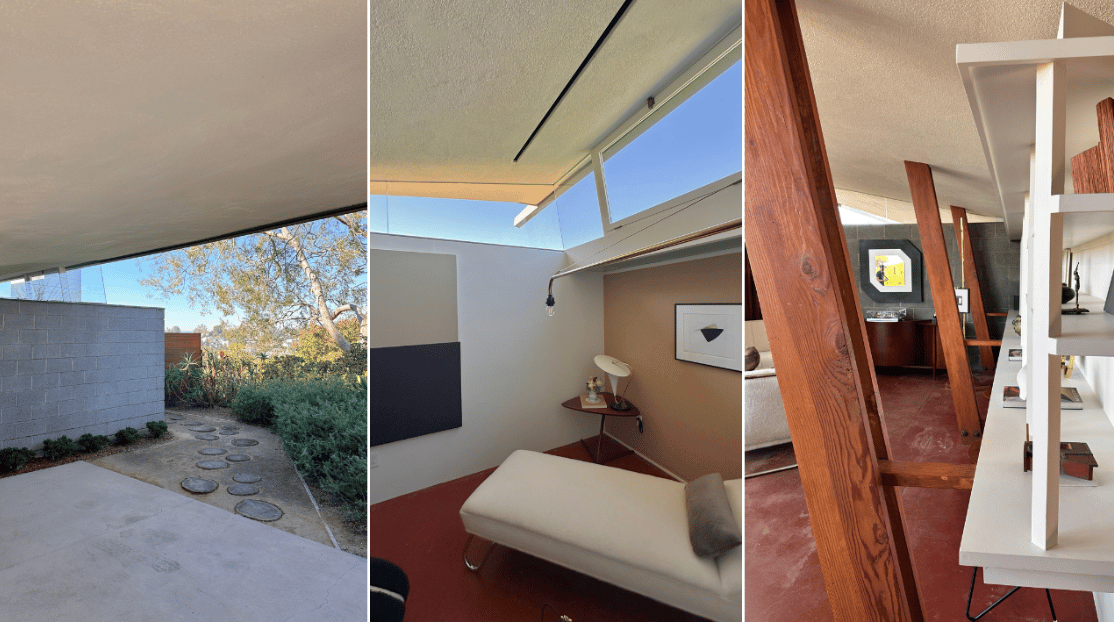
Organic integration with the site: Perched on an Echo Park hillside, the residence offers panoramic canyon and Pacific views, creating a dynamic connection between the home and its surroundings.
Structural ingenuity: Characteristic triangular timber elements and an expressive roof form give the home both structural clarity and visual drama.
Light and space: Expansive glass walls and sliding doors invite natural light into the heart of the home, dissolving the boundaries between indoors and out, a hallmark of Lautner’s practice.
Thoughtful restoration: Contemporary kitchens and baths, carefully curated finishes, and restored woodwork and concrete floors honor the home’s original design while elevating it for modern living.
Why Lautner Matters to California Real Estate and Design
John Lautner’s influence extends far beyond the homes he designed,his work helped define a new architectural language for the West Coast. By embracing experimentation, context-driven design, and a fearless use of materials, Lautner pushed the boundaries of what residential architecture could be.
Today, properties like the Salkin House are not only remarkable for their artistry and historical significance, but also for how they enrich the cultural tapestry of Los Angeles real estate. For buyers and admirers alike, owning or living in a Lautner home is about participating in a living history of modern design.
Explore More Architectural Gems with Aspire LA
Whether you’re drawn to mid-century modern icons, historic landmarks, or contemporary design, Los Angeles is full of architectural treasures waiting to be discovered. Stay tuned as we continue to spotlight the visionary designers and extraordinary homes that make Southern California living truly unique.
Sources
Los Angeles Conservancy — John Lautner Biography
Wikipedia — John Lautner
ROST Architects — Eight Things You Should Know About Architect John Lautner
Domus — John Lautner: The Visionary Architect of Domestic Space
Redfin — Jules Salkin Residence, 1430 Avon Terrace, Los Angeles
Wallpaper* — Early John Lautner House in Echo Park Hills